VILLAGE NAME
A Village at the Heart of the Wolds
Situated between Driffield and Market Weighton, and within easy reach of Beverley, the village occupies a central position within this rolling chalk landscape and has been home to people for thousands of years.
Evidence of human activity in the area dates back to the Bronze Age, demonstrating the long-standing attraction of the Wolds as a place to live, farm and travel.
Today, Middleton on the Wolds is a thriving rural community, but its roots lie deep within Yorkshire’s agricultural history.
What’s in a Name?
One of the earliest written references to Middleton on the Wolds appears in the Domesday Book of 1086, the great survey commissioned by William the Conqueror to record land ownership, wealth and resources across England. Middleton was already an established settlement at that time, recorded within the Hundred of Sneculfcros in Yorkshire. The survey shows that the village contained households, agricultural land, a church and a priest, demonstrating that it was already a thriving medieval community nearly a thousand years ago. Supporting Source Village Green – Everything You Need to Know – Village & Cottage
The Domesday record reveals that Middleton was an important agricultural settlement, with several landowners and productive farmland supporting the local population. The presence of a church highlights the village’s significance as a centre of community life and worship during the Norman period. Supporting Source The History of Common Land and Village Greens | Commons and Greens
The name Middleton itself is believed to derive from the Old English words middel and tun, meaning “middle settlement” or “middle farmstead”. This suggests that the village occupied a central position amongst neighbouring communities on the Wolds. Over the centuries, the name has changed very little, providing a direct link to Middleton’s Anglo-Saxon origins. Supporting Source Village green — Grokipedia
Today, almost 1,000 years after its appearance in the Domesday Book, Middleton on the Wolds continues to be shaped by the people who live and work here, while retaining strong connections to its ancient past.
A Landscape Shaped by Farming
For much of its history, Middleton was an agricultural village. Before the enclosure of land in the early nineteenth century, the surrounding countryside was divided into large open fields, common pasture and shared grazing land. Villagers worked strips of land within these open fields, a farming system that had existed for centuries.
Maps showing Middleton before enclosure reveal a landscape divided into named fields such as Hill Field, Middle West Field, Sand Pit Field and Painton Gate Field. These names provide a fascinating glimpse into how earlier generations understood and organised the land around them.
The enclosure changes of the early 1800s transformed the landscape, replacing many communal farming arrangements with the more familiar field boundaries that can still be seen today.
Reading the Village Through Maps
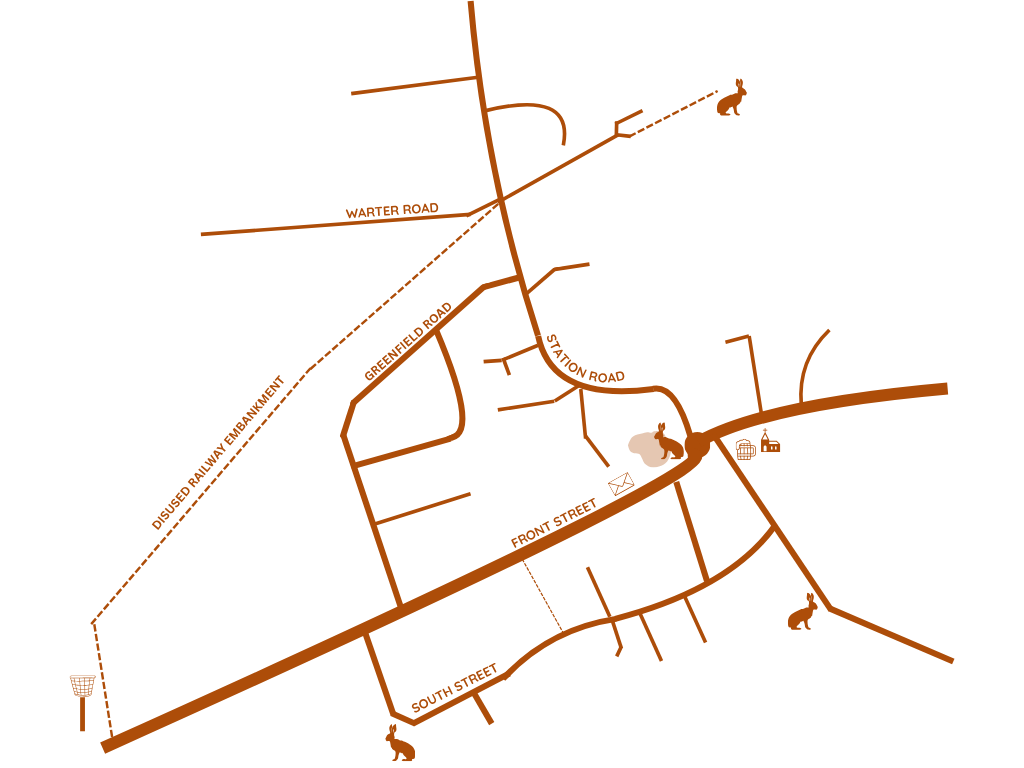
Historic maps allow us to trace how Middleton has developed through time.
Eighteenth-century maps show Middleton as a small but established village surrounded by agricultural land owned by prominent local landowners. Later Ordnance Survey maps reveal the growth of roads, farms and buildings, while twentieth-century aerial photographs capture the gradual expansion of the village.
Despite these changes, the historic core of Middleton remains recognisable. Many of the roads and settlement patterns visible on early maps still define the village today, creating a direct link between modern residents and those who lived here hundreds of years ago.
A Living Heritage
Middleton on the Wolds continues to evolve, just as it has throughout its history. From its origins as an early farming settlement, through medieval times, the enclosure of its surrounding fields and the growth of the modern village, each generation has left its mark on the landscape.
Today, another chapter is being written. New homes are being built during 2026, helping to meet the needs of current and future residents. Recent developments include a partnership between Karbon Homes and Lovell Partnerships to provide a range of new homes, including affordable housing options designed to help local people and families remain within the community. These homes incorporate modern energy-efficient features, reflecting the changing needs and priorities of twenty-first-century village life.
While the appearance of the village continues to change, Middleton retains a strong connection to its past through its buildings, landscapes, traditions and stories. The same qualities that attracted people to settle here centuries ago; a strong community, a productive landscape and a distinctive sense of place, continue to shape village life today.
Understanding the history of Middleton is about more than dates and maps. It is about recognising the generations of people who have shaped this place: the farmers, craftsmen, labourers, families, landowners, shopkeepers, teachers, clergy and community leaders who have all contributed to the village we know today.

As you explore the Heritage Trail, take a moment to consider how the landscape around you has changed over the centuries, and how Middleton on the Wolds continues to write the next chapter of its story.
Written by M. Gillum July 2026

Designed with WordPress